
Customer Profile
Demographic Information
- Age: 20–40 years old, with a strong focus on college students, parents, and families.
- Gender: All genders but mostly females
- Location: Primarily urban, suburban, and rural areas throughout the United States.
- Education Level: High school, college, or higher education.
- Occupation: College students, teachers, healthcare workers, and parents. Income is generally middle-income.
- Marital Status: Single, married, or divorced.
- Household Size: 1–5 people, such as individuals, couples, and families with children.
Psychographic Information
- Interests & Hobbies: Shopping, fashion, beauty, home decorating, and cooking,
- Values & Beliefs: Convenience, affordability, quality, and family
- Lifestyle: Busy and convenience-focused. Probably balancing work, school, family, and social activities.
- Personality Traits: Practical, budget-conscious, social, and interested in current trends.
- Motivations: Convenience, affordability, and being able to find good deals
- Challenges & Pain Points: Limited time, staying within a budget, and finding quality products without having to run around to a bunch of different stores.
Behavioral Information
- Buying Behavior: Shops at Target regularly for groceries, clothing, household items, beauty products, and necessities. They may also make impulse purchases every now and then.
- Product/Service Usage: Uses Target for everyday necessities as well as products for entertainment, fashion, home, and personal care. Convenience and variety are very important to them.
- Online Behavior: Uses Target’s website and app to search for products, compare prices, read reviews, and place orders. Social media such as TikTok, Instagram can also influence their purchases.
- Customer Journey: They may see a product online and then search for it and compare prices/reviews then go to Target or order online if they have a good experience, they’ll most likely resort to going to Target in the future.
Goals and Obectives
- Short-Term Goals: Save money, purchase necessities, and find products easily.
- Long-Term Goals: Maintain a comfortable lifestyle while managing a budget.
- How Target Helps: Target provides a wide variety of products and allows customers to shop both in stores and online.
Objections and Concerns
- Potential Barriers: Customers may choose another retailer if they find lower prices or better quality.
- Common Questions: “Can I find this cheaper somewhere else?” “Can I pick it up at the store?” “Can I order it online?” “Is it in stock?”
Influence Factors
- Influencers: Friends and family, social-media influencers, advertisements, and current trends.
- Media Consumption: TikTok, Instagram, and online shopping.
Quotes & Real-Life Examples
- Customer Quote: “No one goes to target because they need something. You go to target and let target tell you what you need.— Example persona quote, not a verified customer interview.” -Haley on X
- “Whether you’re searching for pajamas, clothes, or crockpots, you’ll never see passed styles at Target.”-The Budget Fashionista
- Case Study: In 2012, a father walked into a Target store furious that they had mailed his teenage daughter advertisements for cribs and maternity clothes. He accused the store of promoting teen pregnancy. He later found out his daughter was actually pregnant.
Name and Visual Representation
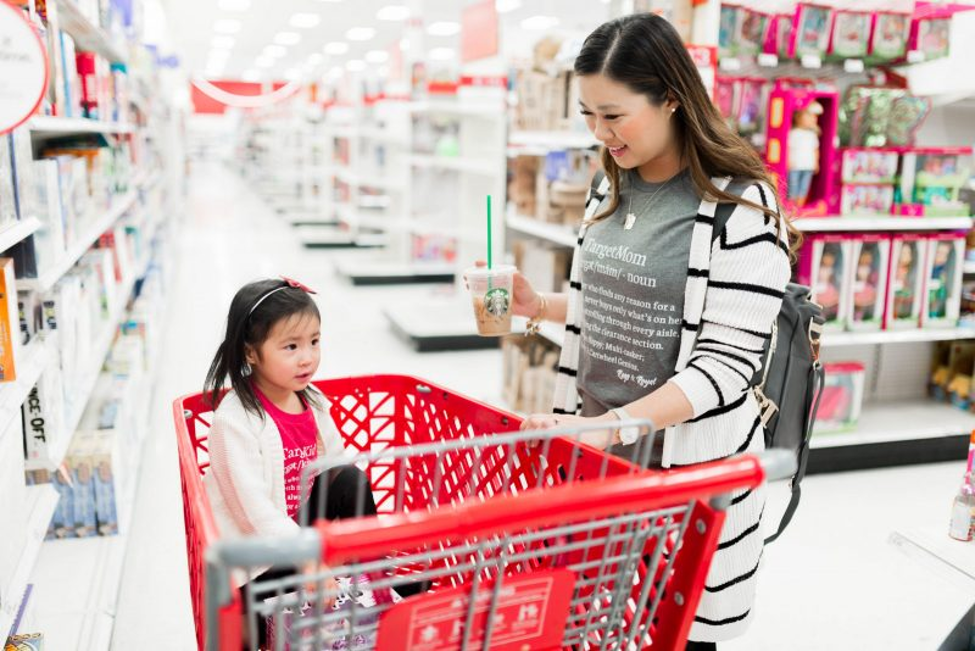
- Persona Name: Mandy Grace
- Age: 32
- Occupation: Teacher and mom to one
- Photo/Image: A mother shopping at Target with her kid in a shopping cart.
Sources:
Who Shops at Target? Examining America’s Favorite “Upscale Discounter” – Marketing Scoop
Why is America Obsessed with Target? | by Kaeli Gilmore | Medium
Target Review: 11 Reasons Why We Love Target
Case Study: Target’s Predictive Advertising Strategy • PubAdmin.Institute