Customer Persona
Information needed
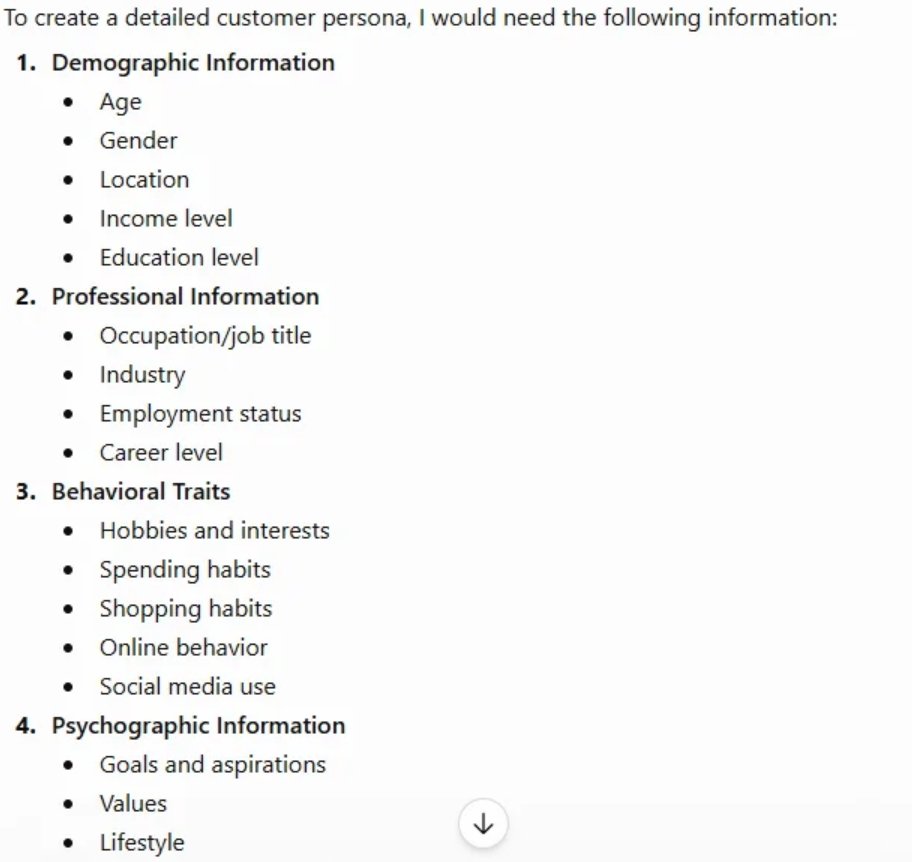
To begin creating a customer persona for Starbucks, I first needed to determine what information was required. The purpose of creating a customer persona is to understand the target customer so marketing strategies and content can be created around their needs, interests, and behaviors. I asked ChatGPT what information it would need to create a customer persona using the following prompt:
“I want to create a customer persona. What information do you need to create it?”
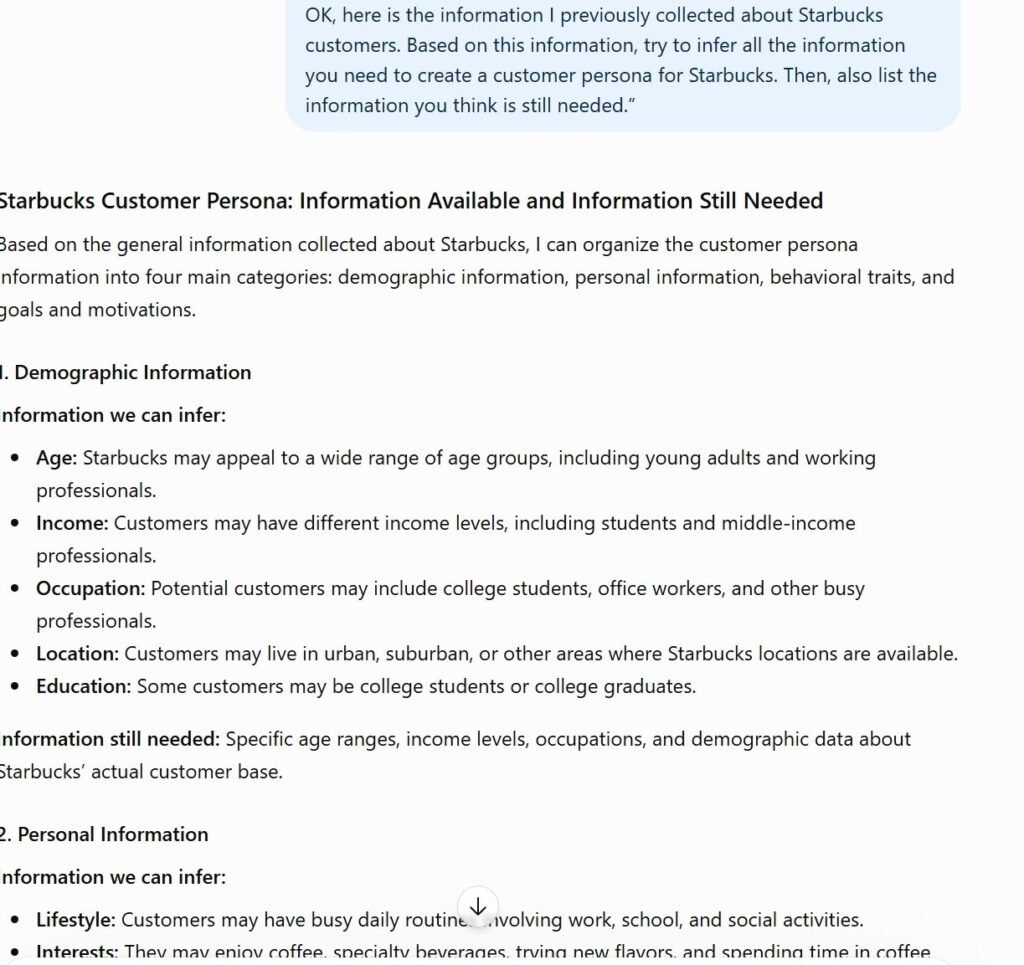
Next, I provided ChatGPT with the information I previously collected about Starbucks. I asked ChatGPT to use this information to determine what could already be used for the customer persona and what information was still needed. I used the following prompt:“OK, here is the information I previously collected about Starbucks customers. Based on this information, try to infer all the information you need to create a customer persona for Starbucks. Then, also list the information you think is still needed.”
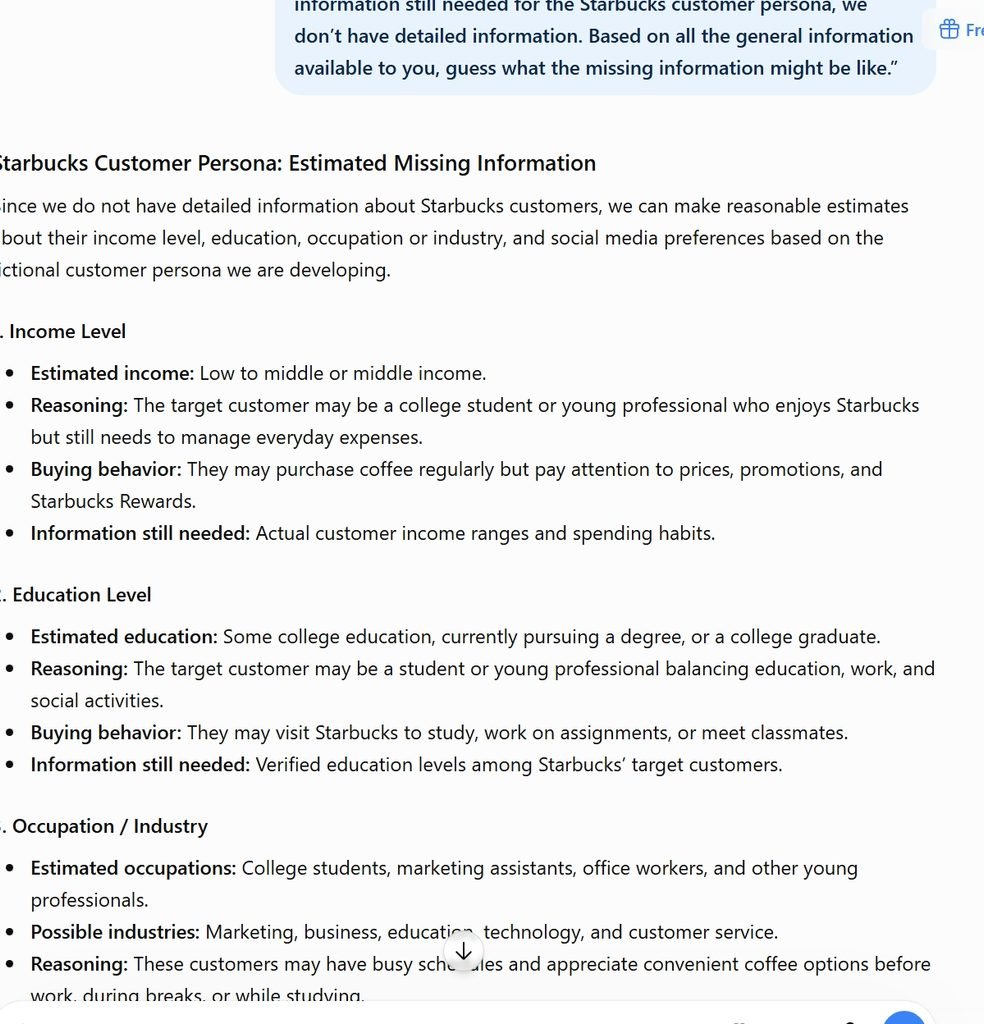
Non-providable information
Some information about Starbucks customers was not available from the information I previously collected. To complete the customer persona, I asked ChatGPT to make reasonable estimates for the missing information. I used the following prompt: “Regarding the information still needed for the Starbucks customer persona, we don’t have detailed information. Based on all the general information available to you, guess what the missing information might be like.”
Generating customer persona
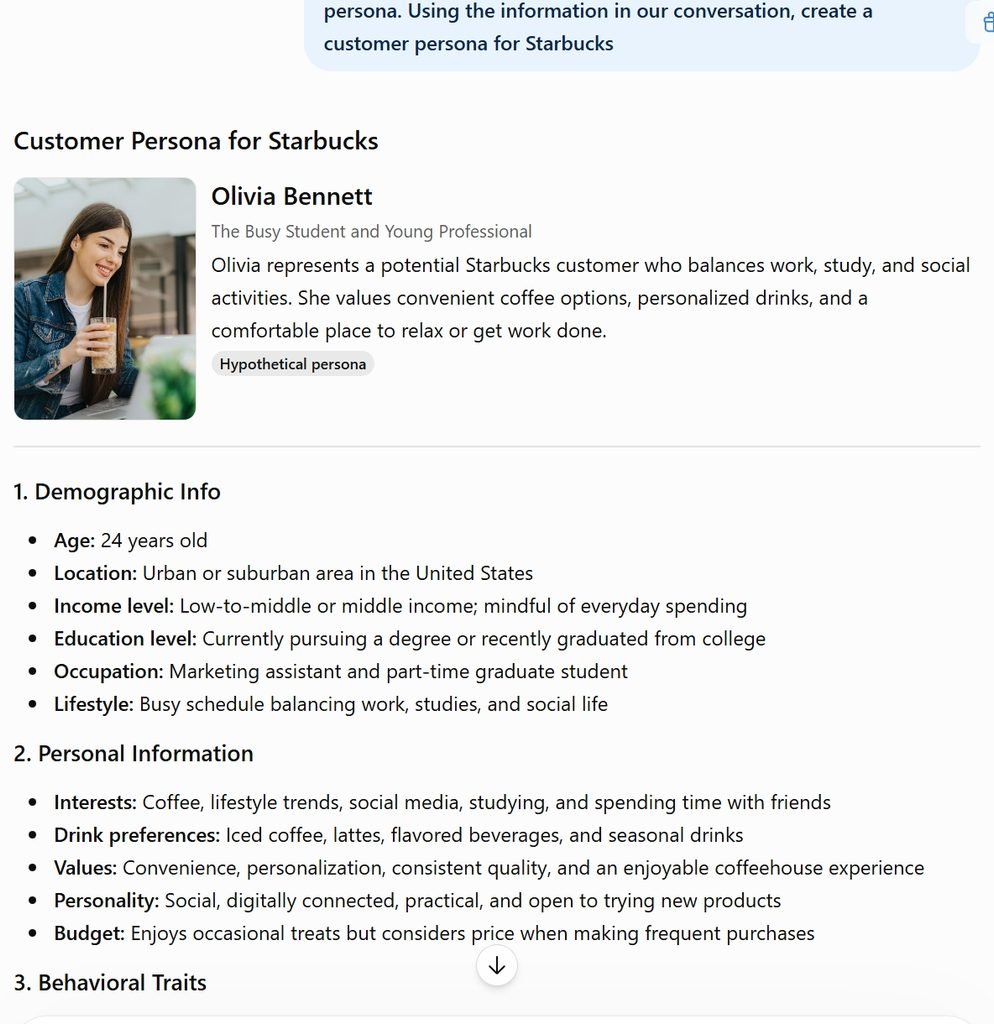
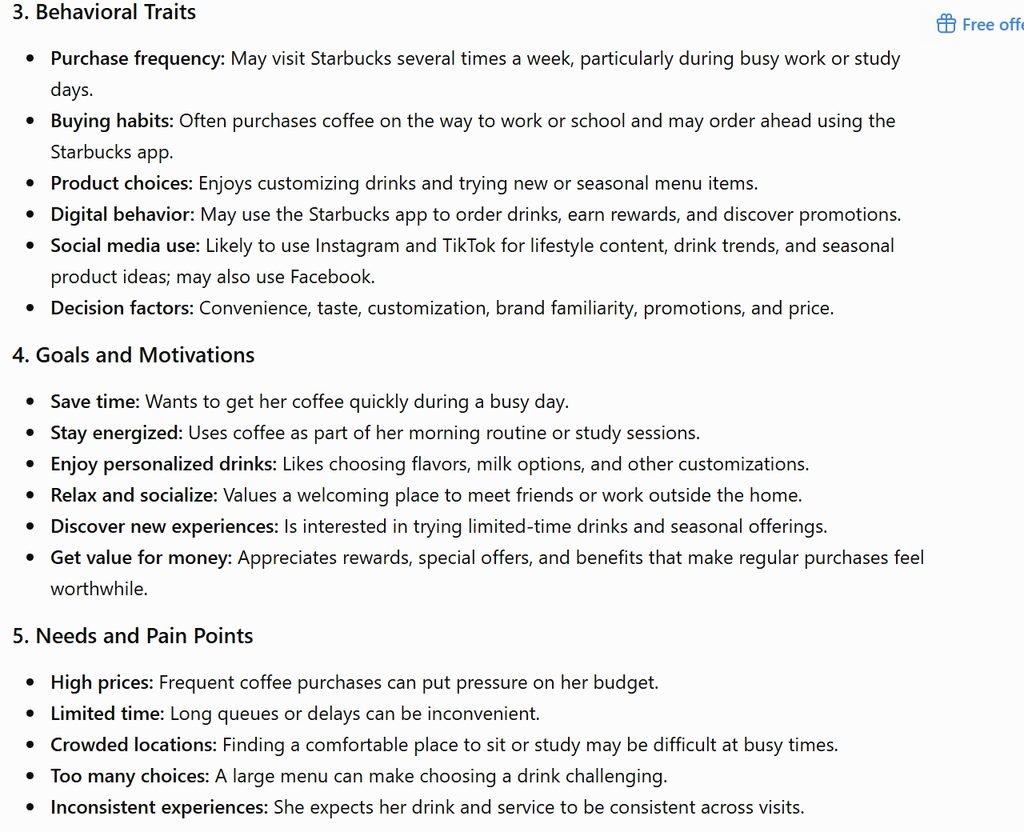
After filling in the missing information, I had enough information to create a sample customer persona for Starbucks. The goal of this step was to create a clear target customer that could guide the rest of the marketing process. I used the following prompt: “Now, you seem to have all the information to create a customer persona. Using the information in our conversation, create a customer persona for Starbucks.”
Result: Customer Persona — Olivia Bennett
Search engine optimization (SEO)
Keyword research
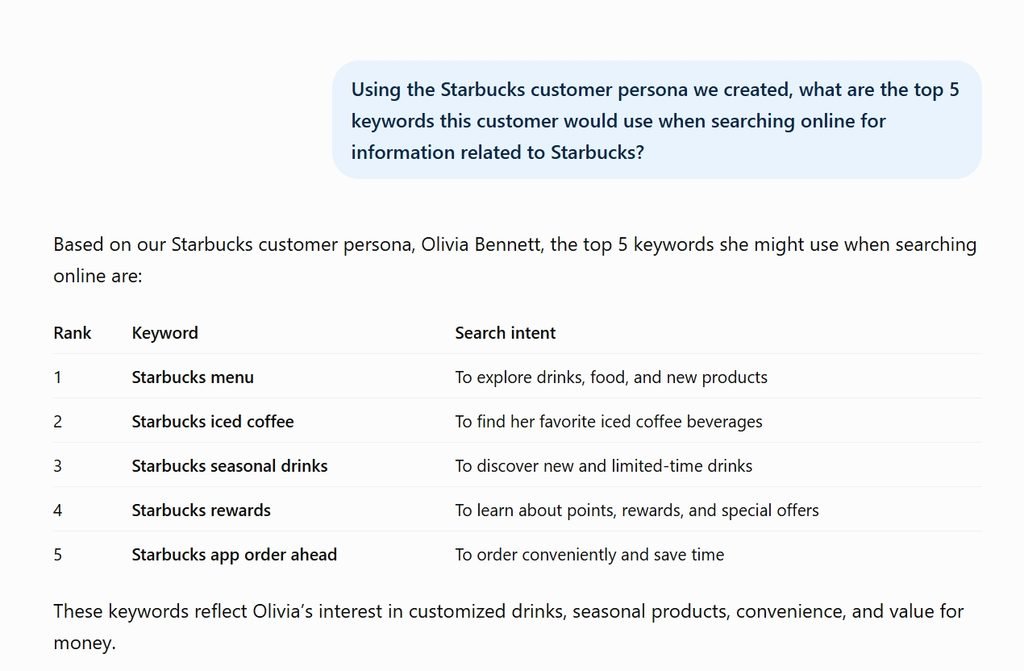
Next, I used the customer persona to identify keywords that potential Starbucks customers may use when searching online. Finding relevant keywords can help create content that better matches what the target audience is searching for. I used the following prompt: “Using the Starbucks customer persona we created, what are the top 5 keywords this customer would use when searching online for information related to Starbucks?”
Content creation
Blog post idea
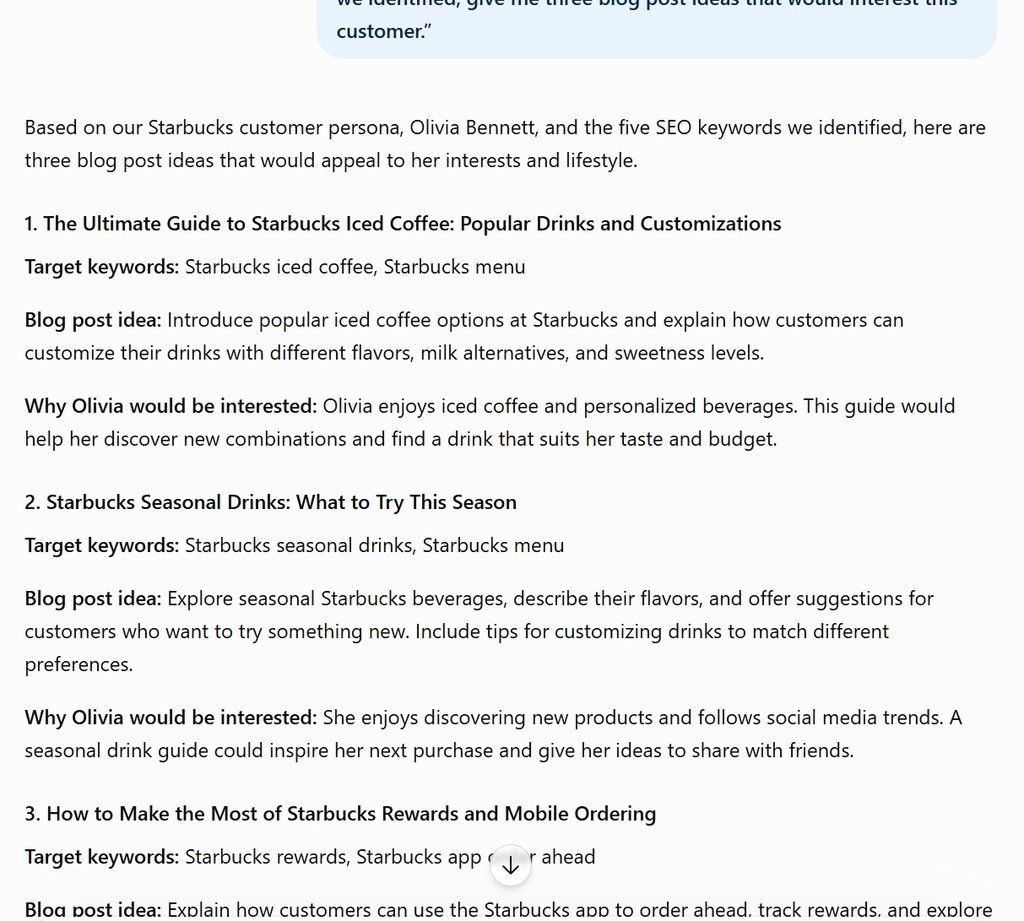
Next, I used the customer persona and SEO keywords to develop blog post ideas that would interest Starbucks customers. I used the following prompt: “Using the Starbucks customer persona and the five SEO keywords we identified, give me three blog post ideas that would interest this customer.”
Writing a blog post
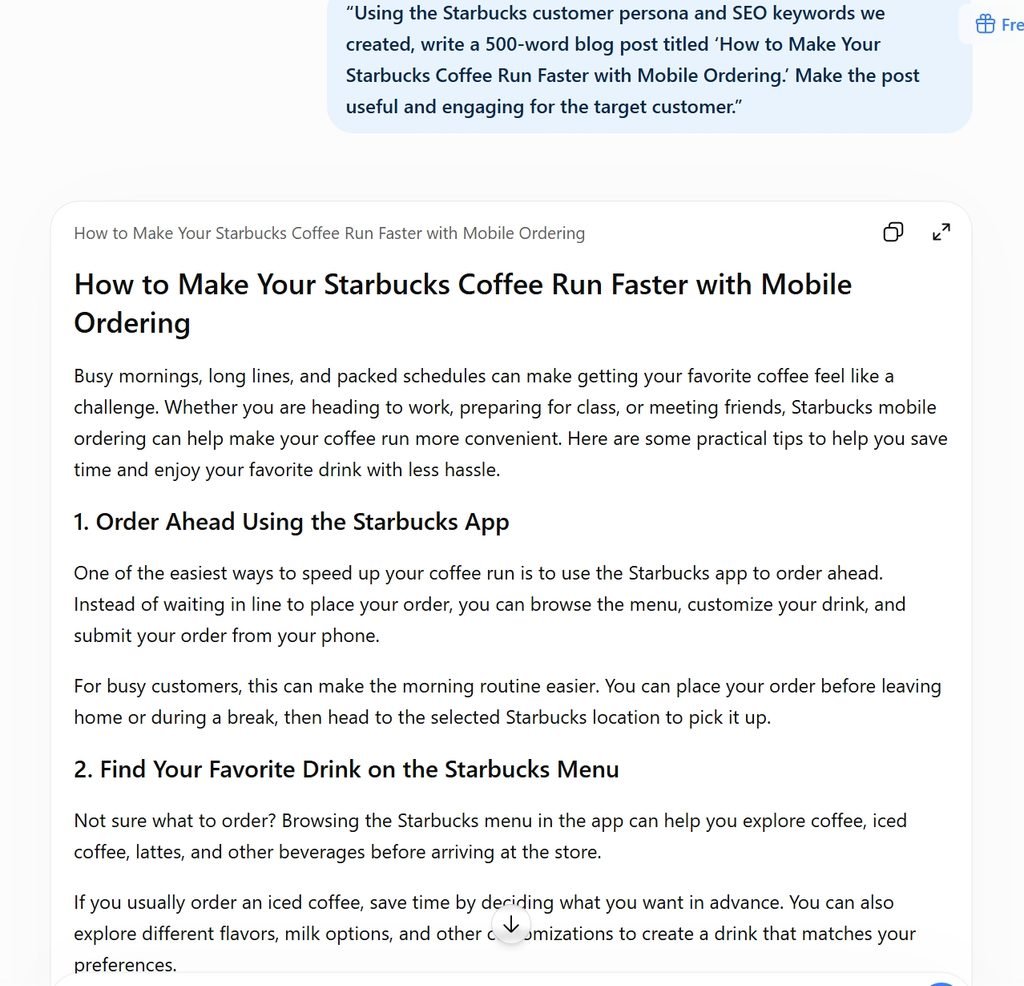
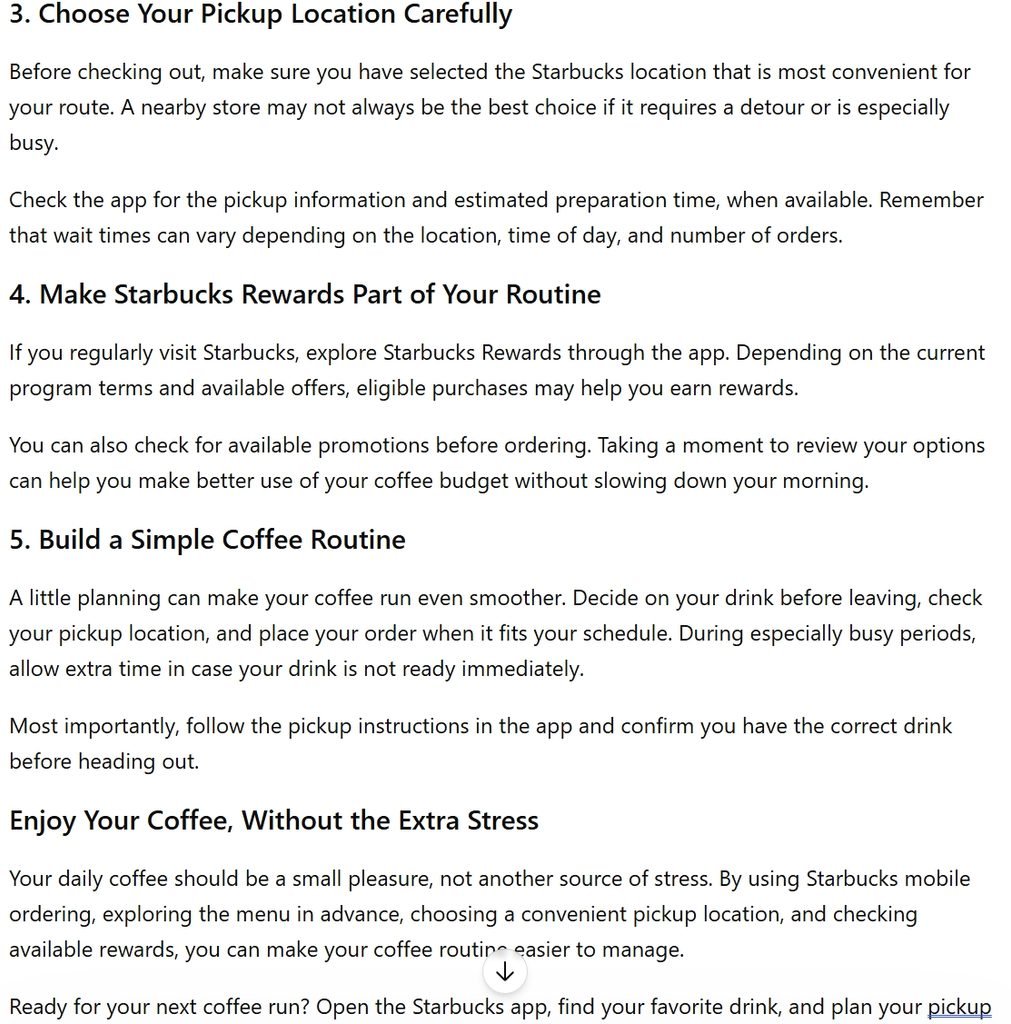
After reviewing the three blog post ideas, I chose “How to Make Your Starbucks Coffee Run Faster with Mobile Ordering.” I chose this topic because mobile ordering relates to customers who have busy schedules and want to save time. It also connects to Starbucks’ digital ordering experience and one of the SEO keywords we identified. I used the following prompt: “Using the Starbucks customer persona and SEO keywords we created, write a 500-word blog post titled ‘How to Make Your Starbucks Coffee Run Faster with Mobile Ordering.’ Make the post useful and engaging for the target customer.”
Social Media Post
Next, I used ChatGPT to create a short LinkedIn post that could promote the blog post to the target customer. I used the following prompt: “Using the Starbucks customer persona, create a short LinkedIn post promoting the blog post ‘How to Make Your Starbucks Coffee Run Faster with Mobile Ordering.’ Include a mention of Starbucks using LinkedIn’s tag feature and leave space for the blog post link at the end.”
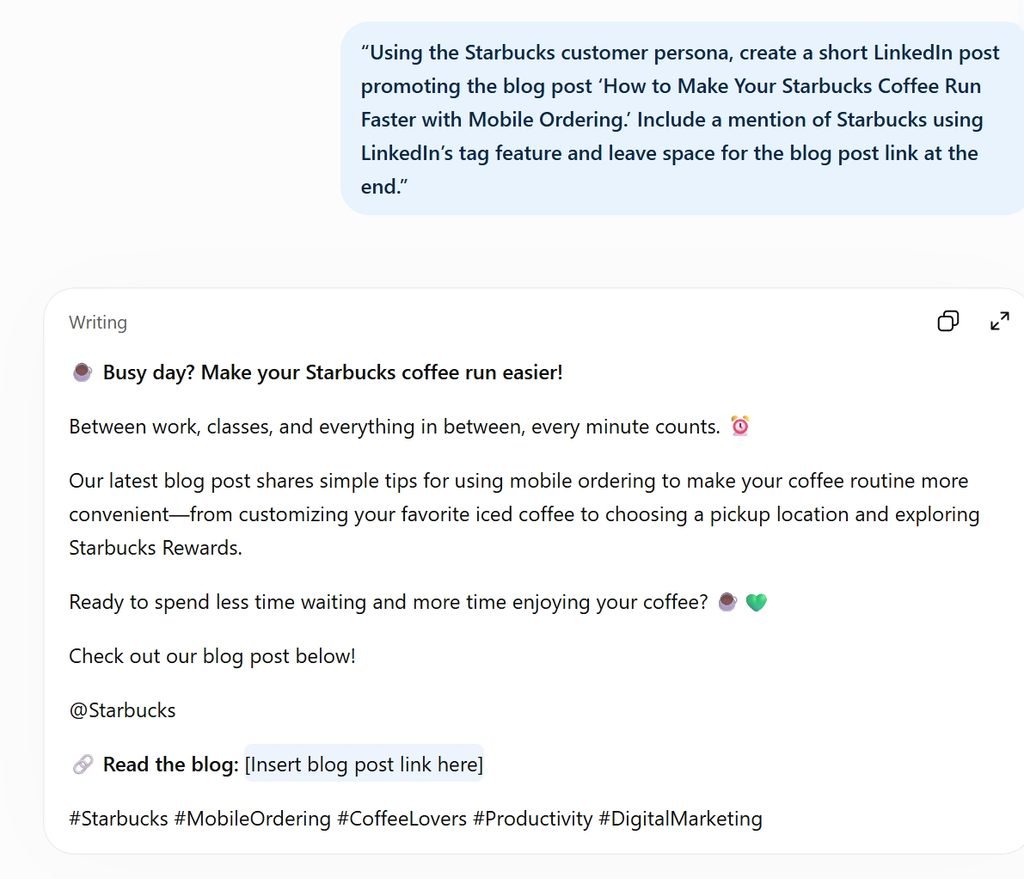
Image creation
The goal of creating an image was to make the content more visually appealing while keeping it relevant to Starbucks and its target customer. I used ChatGPT to create a prompt that could be used with an AI image generator. I used the following prompt: “I am going to draw a picture regarding the text below using an AI image generator. Write a proper prompt — Starbucks strives to develop new beverages and products while providing customers with a welcoming coffeehouse experience. The company offers a variety of coffee and other beverages, customizable drinks, and convenient ordering options. It also works to create a sense of connection with customers and communities.”
“Create a realistic promotional image for Starbucks showing a young adult customer enjoying an iced coffee in a warm, modern coffeehouse. Include a laptop, a smartphone displaying a generic mobile-ordering interface, and a freshly prepared iced coffee on the table. Feature a welcoming café environment with natural lighting, warm wood textures, and subtle green accents inspired by Starbucks’ visual identity. The image should communicate convenience, personalization, quality, and connection. Use a polished, professional coffee-brand advertising style with realistic details and an inviting atmosphere. Avoid distorted text, inaccurate logos, and exaggerated product features.”
I then copied the prompt created by ChatGPT into Leonardo.AI to generate the image. I used the same prompt so the image would reflect Starbucks, the target customer, and the coffeehouse experience.

Last remarks
This assignment showed me how AI can be used throughout different parts of digital marketing instead of just creating content. Starting with a customer persona made it easier to identify possible keywords and create content that was more relevant to the target customer. I also saw how the same information could be used to develop blog post ideas, write a blog post, create a LinkedIn post, and generate a promotional image.